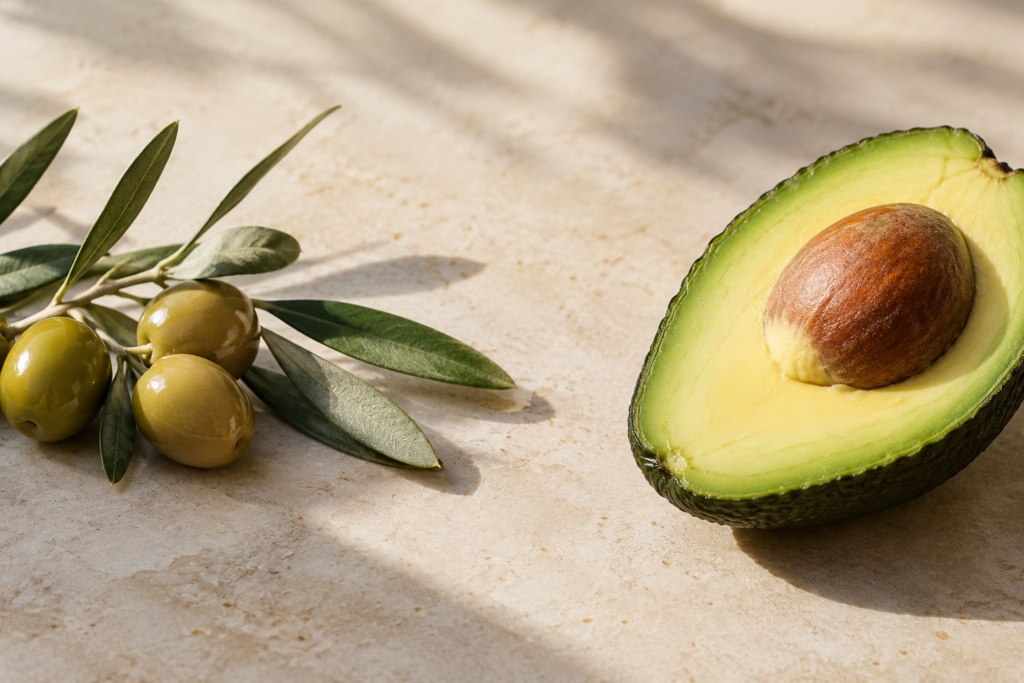


Both have a reputation for being good-for-you kitchen staples. Both are rich in good fats. And both can do much more than dress a salad. So what actually sets avocado oil and olive oil apart? And does it matter which one you reach for? From high-heat cooking to flavour and nutrition, here’s what’s worth knowing before your next pour.
Which oil should you use for cooking?
Avocado oil is known for its high smoking point, making it well suited to everyday high-heat cooking like roasting, pan-frying, searing and BBQing.¹ Its mild flavour is another advantage: it lets the ingredients you’re cooking take centre stage rather than adding a strong flavour of its own.
Olive oil can absolutely be used for cooking too. But a good extra virgin olive oil really shines when flavour is the point. Its fruity, peppery or slightly bitter notes can become part of the finished dish, making it a natural choice for drizzling over pasta, dipping with bread, dressing salads or adding that final flavourful touch.
Think of it this way: reach for avocado oil when you want heat + versatility, and olive oil when you want the oil itself to add flavour.
Which is healthier: avocado oil or olive oil?
Both can be part of a healthy diet.
Avocado oil and olive oil are both rich in monounsaturated fats, with oleic acid typically being the predominant fatty acid. Avocado oil can also contain naturally occurring compounds including tocopherols (vitamin E), carotenoids, phytosterols and polyphenols.¹
Extra virgin olive oil is particularly well known for its polyphenols and currently has a much larger body of human health research behind it.
So rather than thinking “which is healthier?”, think about adding quality sources of unsaturated fats to your everyday meals.
What about flavour?
Olive oil has a distinctive flavour that can be fruity, peppery or slightly bitter. Delicious when you want the oil to be part of the taste!
Avocado oil is typically much milder, with slightly buttery flavour, so it works across everything from eggs and roast vegetables to chicken, baking and salad dressings without overpowering the other ingredients. For a busy family kitchen, that flexibility can make a real difference.
So, which should you keep in your kitchen?
There’s room for both. Olive oil shines when you want its distinctive flavour. Avocado oil shines when you want versatility.
That doesn’t mean avocado oil is only for high heat, or that olive oil can’t be cooked with. It’s simply an easy way to make the most of what each oil does particularly well.
At Grove, that’s one of the things we love most about our avocado oils. Its mild flavour and ability to perform across different cooking methods make it an easy oil to reach for every day, from frying eggs in the morning to roasting vegetables at dinner. And when the heat goes up, avocado oil really comes into its own. Whether you’re searing, roasting, frying or firing up the BBQ, it gives you the flexibility to cook confidently without overpowering the flavours on your plate!
Sources & further reading
¹ Flores M. et al. (2019). Avocado Oil: Characteristics, Properties, and Applications. Molecules.