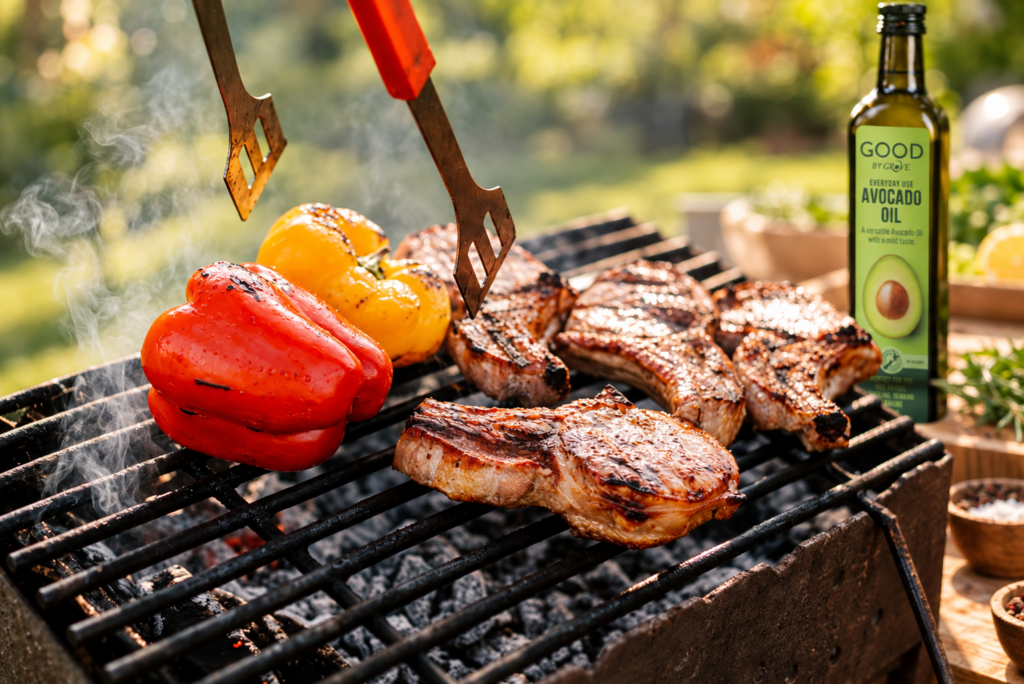


Roasting, frying, searing or firing up the BBQ? You’ve probably heard that you need an oil with a high smoke point. But what does that actually mean? And should smoke point be the only thing you look at when choosing a cooking oil? Here’s the simple version.
What is a smoke point?
An oil’s smoke point is the temperature at which it begins to visibly smoke. As oils are heated, chemical changes gradually take place. Smoke point is one useful indicator when choosing an oil for cooking (particularly when you’re working at higher temperatures), but it isn’t the whole story.
An oil’s overall performance under heat also depends on factors such as its fatty acid composition, antioxidants, quality, processing and how long it is heated.
Why does smoke point matter when cooking?
Quite simply, you generally don’t want your cooking oil smoking away in the pan. Choosing an oil suited to your cooking temperature can help you:
Avoid burnt flavours that can develop when an oil is overheated.
Cook confidently at higher temperatures, whether you’re roasting, frying or searing.
Choose the right oil for the job, rather than using smoke point as the only measure of oil quality.
And remember: hotter isn’t always better. Different oils have different strengths depending on what you’re cooking.
Does avocado oil have a high smoke point?
Yes. Avocado oil is known for its high smoke point, although the exact temperature varies depending on the oil and how it has been produced and refined. Published literature reports smoke points for avocado oil reaching around 250–270°C for some avocado oils. That combination makes avocado oil a versatile option for everyday cooking, from roasting and pan-frying to searing and BBQ cooking.
Does a high smoke point mean an oil doesn’t change when heated?
No, and this is an important distinction. Smoke point and heat stability aren’t exactly the same thing. Research shows that heating avocado oil can gradually affect oxidation and naturally occurring compounds such as carotenoids, phytosterols and chlorophylls, particularly with prolonged or repeated exposed to high temperatures. As with any cooking oil, avoid unnecessarily overheating it or repeatedly heating it for long periods.
So a high smoke point doesn’t mean an oil is unaffected by heat. It simply gives us one useful measure of how an oil behaves when temperatures rise.
Why choose Grove Avocado Oil for your everyday cooking?
Avocado oil’s naturally high smoke point makes it a great fit for everyday high-heat cooking. And at Grove, we give you two ways to make the most of it: Grove Extra Virgin Avocado Oil, cold-pressed for its naturally distinctive character, and Good by Grove, our refined 100% avocado oil with a particularly mild flavour.
From roasting and pan-frying to searing and firing up the BBQ, avocado oil gives you the versatility to turn up the heat and cook with confidence.
Sources & further reading
Resende L.M.B. et al. (2019), Journal of Food Science and Technology — Effects of temperature on avocado oil quality, oxidation and phytochemical content.
Berasategi I. et al. (2012), Food Chemistry — Stability of avocado oil during prolonged heating at 180°C.
American Oil Chemists’ Society (AOCS) — Composition, characteristics and smoke point of extra virgin cold-pressed avocado oil